Navigating shallow water in a boat requires skill, attention, and understanding of your vessel’s capabilities. Whether exploring backcountry flats, cruising coastal bays, or navigating rivers and inlets, knowing how to safely operate in shallow water protects your boat from damage and prevents dangerous grounding situations.
This comprehensive guide covers everything you need to know about shallow water navigation, from understanding draft and clearance to reading water conditions and using proper techniques for different boat types.
Understanding Boat Draft: The Foundation of Shallow Water Navigation
Draft represents the vertical distance from the waterline to the deepest part of your boat’s hull, propellers, or keel. This measurement determines the minimum water depth your boat needs to float without touching bottom. Understanding your boat’s draft is the single most important factor when navigating shallow water.
Types of Draft You Need to Know
Static Draft measures your boat when stationary. This figure, typically listed in boat specifications, shows how much water your vessel displaces at rest. Small boats like kayaks and dinghies have drafts under one foot, fishing boats and pontoons usually draw one to two feet, while sailboats with deep keels can exceed six feet.
Running Draft describes how much water your boat needs when moving, particularly when on plane. Modern powerboats rise substantially out of the water once planing, reducing draft by several inches or more. A boat with a two-foot static draft might only need 12-14 inches of water when cruising on plane, making this distinction critical for shallow water navigation.
Engine Up vs Engine Down Draft applies to boats with tilting outdrives or outboards. With the engine tilted up, draft decreases significantly, sometimes by a foot or more. However, you can’t operate at full power with the engine fully raised, limiting this option to idle-speed maneuvering. As a general rule, add nine inches to engine-up draft to estimate how much depth you need with the engine down far enough to engage gears and move forward.
For boaters wanting real-time awareness of depth relative to their specific vessel, modern marine navigation systems now provide draft-aware features that automatically adjust depth displays based on your boat’s specifications.
The 1.5x Draft Safety Rule
Experienced boaters follow a simple guideline: maintain water depth at least 1.5 times your boat’s draft. If your vessel draws three feet, navigate in water at least 4.5 feet deep. This buffer accounts for waves, wake, and unexpected bottom changes that could cause grounding. In unfamiliar waters, conservative boaters increase this to 2x draft for additional safety margin.
Tides complicate this calculation significantly. A channel with comfortable clearance at high tide becomes dangerously shallow at low tide. Understanding how tides affect navigation helps you time passages through marginal areas and avoid getting trapped by falling water levels.
Reading Shallow Water: Visual Clues and Indicators
Successful shallow water navigation requires learning to “read” the water using visual cues that reveal depth changes before your boat reaches them.
Water Color Changes
Water color provides reliable depth indication in clear conditions. Deep water appears dark blue or dark green, while shallow areas show lighter colors, turquoise, light green, or tan depending on bottom composition. The transition from dark to light water marks the shoaling edge where depth decreases rapidly.
Sand bottoms create light tan or white appearances in very shallow water. Grass beds show as dark patches in otherwise light shallow areas. Rocky bottoms produce irregular color patterns. Learning these patterns in your local waters builds visual navigation skills that complement electronic depth finders.
Surface Texture and Wave Patterns
Water surface texture changes over shallow areas. Smooth water develops ripples or chop when depth decreases, as bottom friction affects wave movement. Breaking waves or whitecaps in otherwise calm conditions almost always indicate shallow bars or reefs requiring avoidance.
Wind-driven waves shorten and steepen over shoals, creating distinctive “lumpy” water compared to the longer swells in deeper areas. Experienced boaters recognize these patterns from considerable distance, allowing early course corrections before entering hazardous shallows.
Current and Tidal Indicators
Current moving over shallow areas creates surface disturbances visible from a distance. Eddies, swirls, or standing waves mark shallow bars where tidal flow accelerates over restricted bottom. These features become more pronounced during strong tidal currents, providing clear warnings to attentive navigators.
Birds and marine life also indicate shallow areas. Wading birds congregate on exposed bars and flats, while baitfish fleeing predators in skinny water create surface activity that reveals depth. Using these natural indicators supplements electronic navigation tools and traditional chart reading.
Plan Your Route Before Entering Shallow Water
Successful shallow water navigation begins before you ever leave the dock. Review your charts to identify marked channels, shoals, sandbars, and other shallow hazards along your route. If you’re boating in tidal waters, check tide predictions to make sure you’ll have enough depth throughout your trip, especially if you’ll be returning several hours later. It’s also helpful to note nearby marinas, safe anchorages, and alternate routes in case conditions change. Spending a few minutes planning your course ahead of time reduces surprises on the water and gives you more confidence when navigating unfamiliar areas.
Essential Techniques for Navigating Shallow Water
Slow Down When Uncertain
The first rule of shallow water navigation: reduce speed when unsure of depth. While this increases required draft (boats off-plane settle deeper into the water), running aground at low speed prevents serious damage, injury, and stranding. High-speed groundings can hole hulls, shear propellers, bend shafts, and throw passengers violently.
If you know the area well and have verified sufficient depth for running draft but not static draft, staying on plane allows crossing shallows safely. However, this technique requires absolute confidence in conditions, any doubt warrants slowing to idle speed.
Trim Your Engine Strategically
Boats with tiltable outboards or outdrives gain shallow water advantage through strategic engine trimming. Raising the engine reduces draft by bringing the propeller and lower unit higher in the water column. However, excessive trim creates problems: exaggerated bow rise during acceleration, reduced steering control, and potential prop ventilation (cavitation) that eliminates forward thrust.
The proper shallow water trimming technique varies by situation. When idling through very shallow areas, trim the engine as high as possible while maintaining steerage. When accelerating onto plane in marginal depths, start with the engine down to prevent bow-from-digging, then trim up once on plane to reduce running draft.
Some experienced shallow water boaters use the drive unit as an anchor in sand or mud, intentionally embedding the skeg to hold position. Conversely, when stuck, trimming the engine fully out of the water often provides the clearance needed to back off.
Keep Moving and Stay on Plane
A critical shallow water technique: if you find yourself running through marginal depth while on plane, keep going until you reach deeper water. When boats drop off plane, the forefoot (forward bottom sections) engages the water, and full displacement takes effect, dramatically increasing draft. The boat “squats” deeper into the water.
Additionally, boats experience increased lift in water depths equal to their draft due to ground effect. You can feel the boat rise slightly as you cross a shoal while planing. Throttling back and settling off plane in this situation almost guarantees grounding, while maintaining speed carries you safely through.
This technique requires good judgment. Only continue at speed if you’re confident the shallow area is brief and clear of obstructions. Unknown conditions demand slowing down despite the increased draft penalty.
Use Weight Distribution to Your Advantage
Shifting weight affects boat trim and effective draft. Moving crew and gear forward raises the transom slightly, reducing draft at the stern where propellers and drives extend deepest. This technique helps when navigating shallow areas or attempting to free a grounded boat.
Conversely, weight aft can help bring the bow down when accelerating in marginal depths, reducing the bow-rise that increases likelihood of the drive unit hitting bottom. Understanding how weight distribution affects your specific boat’s behavior improves shallow water performance.
Deploy Trim Tabs for Shallow Running
Boats equipped with trim tabs gain additional shallow water capability. Deploying tabs creates stern lift, effectively reducing running draft by bringing the boat higher in the water. Tabs also allow “running on edge”, listing the boat to one side so the deeper V-section keel clears while the hard chine (which runs shallower) supports the boat.
Flats fishing guides perfect the technique of finding a deeper pothole, deploying tabs, gunning the throttle while turning hard, bringing the boat on plane “on edge,” then doubling back into deep water before straightening out. This maneuver requires practice and adequate space but provides capability in extremely shallow conditions.
Navigation Tools and Technology for Shallow Waters
Depth Sounders and Fish Finders
Electronic depth finders provide real-time bottom readings essential for shallow water navigation. Modern units display depth digitally and graphically, with alarms settable to warn when water shoals to dangerous levels. Set your shallow water alarm to trigger at 1.5 times your draft, giving advance warning before reaching critical depth.
Forward-looking sonar represents recent technology advancement, scanning ahead of your boat rather than just below. These systems detect bottom changes, obstacles, and shallow areas before you reach them, providing precious seconds to react and adjust course. For boaters frequently navigating challenging shallow waters, forward-looking sonar significantly improves safety.
GPS Chartplotters and Navigation Apps
Modern GPS chartplotters display your position on electronic charts showing depth contours, marked channels, and shallow hazards. Quality charts include detailed bathymetry (bottom mapping) revealing shallow areas, drop-offs, and safe passage routes. Studying charts before departing and monitoring your position relative to depth contours prevents inadvertent groundings.
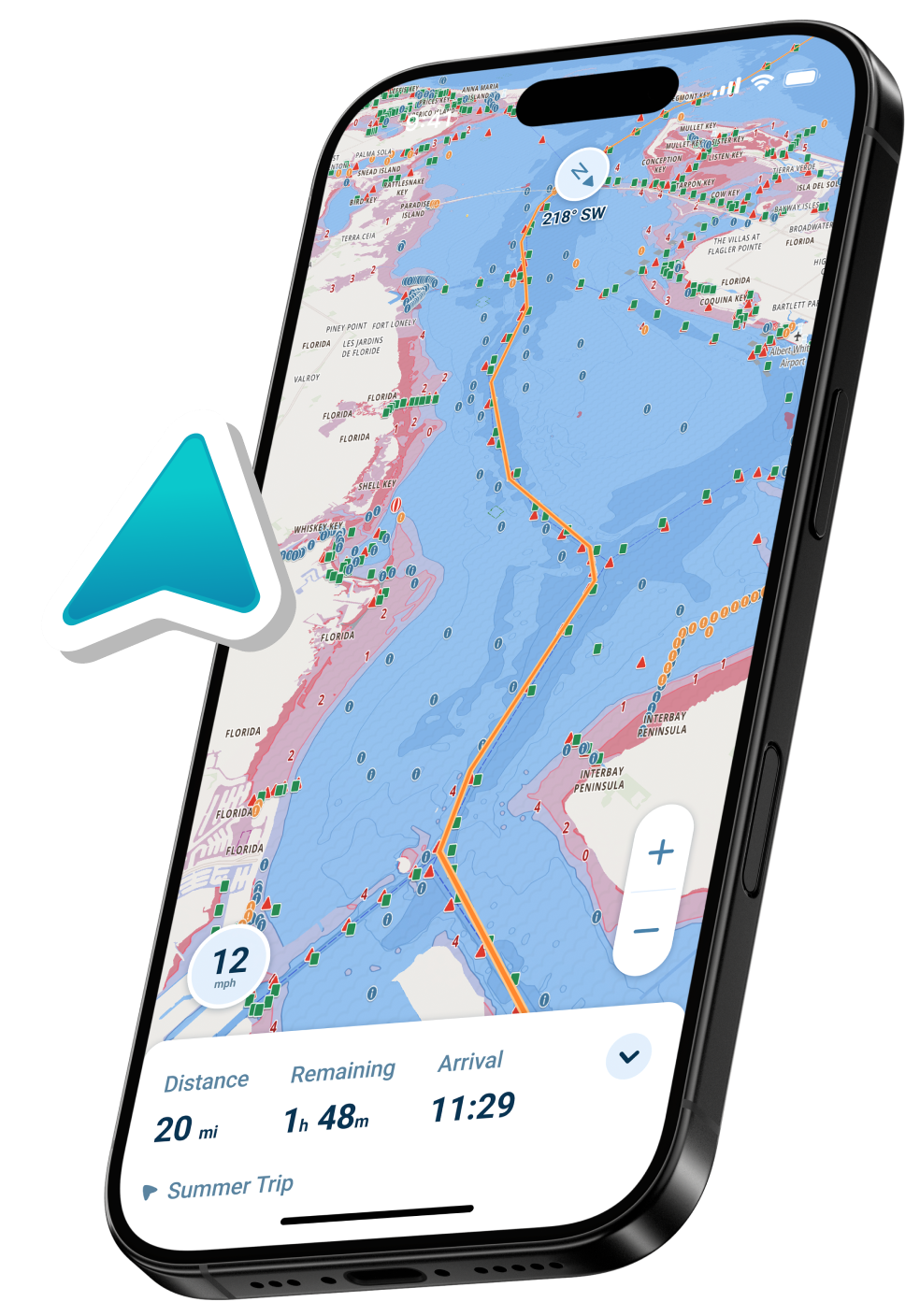
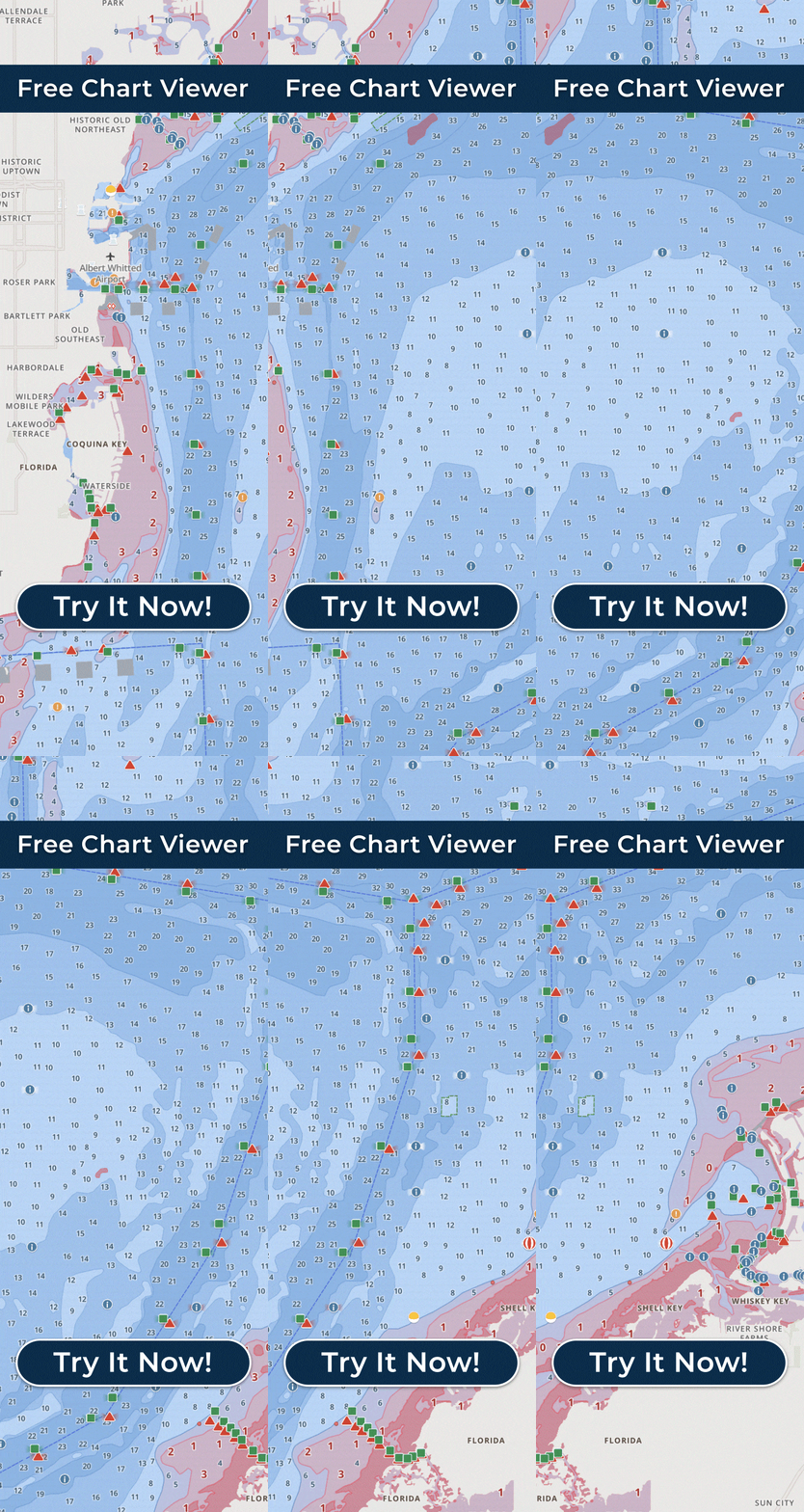
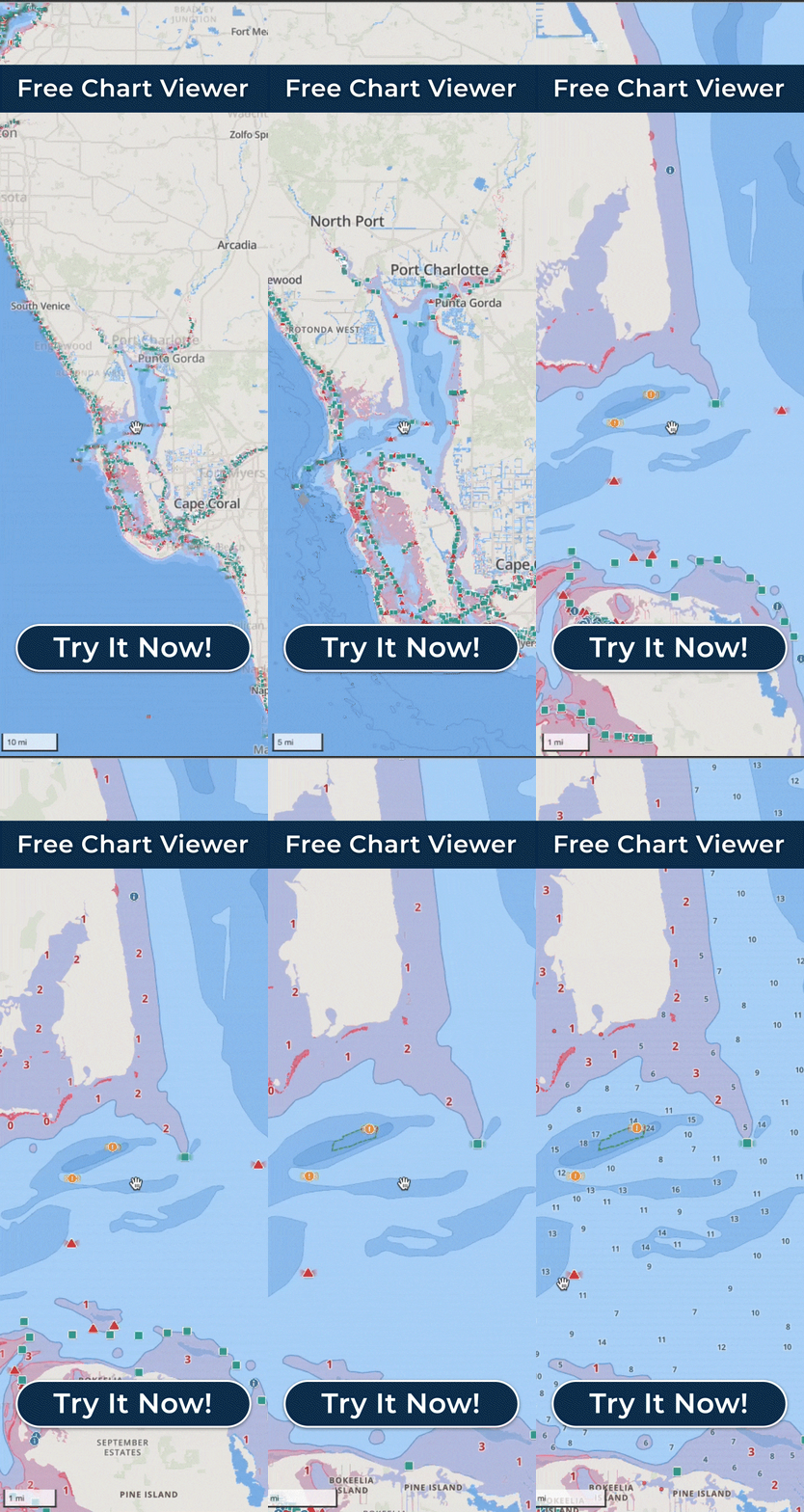
One platform that specializes in shallow water navigation is Wavve Boating, which takes a unique approach by automatically adjusting depth shading based on your vessel’s specific draft. Enter your boat’s draft once, and the system highlights safe areas in blue while marking shallow zones in red based on real-time tide levels. This draft-aware visualization eliminates manual depth calculations and provides instant clarity about where you can safely navigate, particularly valuable in complex shallow environments like backcountry flats or coastal estuaries.
Mobile navigation apps offer portability and regular updates that fixed chartplotters often lack. Many recreational boaters now rely primarily on tablet or smartphone-based marine navigation rather than dedicated electronics, particularly for smaller vessels operating in shallow waters.
Tide Tables and Predictions
Tides dramatically affect available depth in coastal and estuarine waters. A channel comfortable at high tide becomes impassable at low tide. Tide tables showing high and low times, plus predicted heights, allow timing your passage through shallow areas when water levels maximize clearance.
Spring tides (not related to seasons) occur during new and full moons, producing the highest highs and lowest lows. Neap tides occur during quarter moons, with less extreme ranges. Knowing the current tide phase helps predict whether you’ll have more or less water than normal in shallow areas. Weather also affects tides, strong onshore winds can raise water levels above predictions, while offshore winds may lower them.
Pole and Visual Confirmation
In extremely shallow or unfamiliar waters, using a push pole provides direct bottom contact verification. Poling allows feeling bottom composition and exact depth, preventing surprises. While impractical for larger boats or longer distances, poling excels for exploring tight creeks, grassflats, and backcountry areas where even shallow draft boats face challenges.
Similarly, having a crew member stationed at the bow as a lookout provides early visual warning of shallow areas, especially in clear water where bottom features are visible. Two sets of eyes double your chances of spotting hazards in time to react.
Best Boat Types for Shallow Water Navigation
Flats Boats and Skiffs
Purpose-built flats boats offer minimal draft through flat or semi-V hulls, lightweight construction, and tunnel hulls that raise engines above the running surface. Modern technical poling skiffs can operate in inches of water, making them ideal for backcountry exploration, sight fishing, and areas inaccessible to conventional boats. Their shallow draft comes with compromises, limited rough water capability and small load capacity.
Bay Boats
Bay boats balance shallow water access with offshore capability. While not as skinny-water capable as pure flats boats, quality bay boats still draft relatively shallow (14-20 inches) while offering more V-hull deadrise for handling chop. This versatility appeals to boaters wanting both inshore and nearshore options from one vessel.
Jon Boats and Aluminum Boats
Flat-bottom jon boats represent the ultimate in shallow draft, often requiring only 6-8 inches of water. Their simple, lightweight aluminum construction makes them affordable and practical for rivers, lakes, and marshes. The trade-off: they pound harshly in waves and lack the performance of more sophisticated designs.
Jet Boats
Jet propulsion eliminates external drives and propellers, allowing jet boats to navigate shallower than comparable prop-driven vessels. The jet intake sits flush with the hull bottom, and the jet pump housing extends minimal depth below. However, jet intakes can clog with seaweed and grass in vegetated shallows, limiting their advantage in some backcountry environments.
Understanding what different boat types offer helps match vessel selection to your typical navigation conditions.
What to Do When You Run Aground
Even with careful planning, boats can still run aground. Knowing how to respond can help reduce damage and improve your chances of getting safely back underway.
Immediate Actions After Grounding
Stop the engine immediately. Continuing to run the engine drives the boat harder onto the obstruction and risks pumping sand or debris into the cooling system, potentially causing severe damage. Check for hull damage and verify no water is entering the boat. Remember: better grounded than sunk.
Assess the situation before attempting to free the boat. Determine if you hit sand, mud, rock, or oyster shells, as this affects extraction techniques. Note tide stage, if tide is rising, time works in your favor. If falling, act quickly before losing more water depth.
Getting Unstuck from Soft Bottom
For sand or mud groundings, rocking the boat side-to-side reduces draft by tilting the deeper V-sections. This motion may break suction and allow the boat to slide off. Shift weight forward to raise the transom and drive unit, reducing draft at the stern where you’re likely stuck.
Use the engine cautiously, brief reverse thrust may back you off, but aggressive throttle buries the drive deeper and damages the cooling system with sediment. If stuck hard, deploy crew to lighten the boat and manually push, rocking to break suction while pushing.
Getting Unstuck from Hard Bottom
Rock or shell bottom requires more caution, as aggressive attempts to power off can hole the hull. Gently try reverse thrust at idle. If that fails, wait for rising tide if possible. Sometimes accepting temporary stranding prevents worse damage from forced extraction.
Use your anchor to winch off, deploy the anchor in deep water behind you, then pull the rode (anchor line) to drag the boat backward off the obstruction. This mechanical advantage works when engines can’t safely be used.
Prevention Through Preparation
The best grounding response is prevention. Study charts before unfamiliar areas, monitor depth continuously, maintain appropriate speed for conditions, and never let ego override prudence. When local boaters avoid certain areas or routes, there’s usually a good reason. Respect local knowledge and traditional passages rather than trying to “discover” shortcuts through unmarked shallows.
Shallow Water Navigation by Region
River and Creek Navigation
Rivers present unique shallow water challenges: shifting sandbars, current-driven depth changes, and submerged logs or debris. The deepest water typically follows the outside of bends where current scours the bottom. Inside turns accumulate sediment and shoal. Reading current lines reveals safe channels even when bottom isn’t visible.
Recent floods alter river channels dramatically, making previously reliable routes unreliable. After major weather events, proceed cautiously in rivers regardless of local knowledge, as new bars and obstacles may have formed.
Coastal Bay and Estuary Navigation
Tidal influence dominates coastal shallow water navigation. Channels safe at high water become exposed bars at low tide. Plan passages around tide cycles, and always maintain awareness of current tide stage. Storm surge from offshore systems can add or subtract significant depth from normal tide predictions.
Markers and buoys in coastal waters guide through maintained channels, but remember these mark only the charted channel, alternative routes may exist with local knowledge but require careful depth monitoring.
Backcountry and Mangrove Navigation
Backcountry creeks and mangrove-lined waterways require specialized knowledge and appropriate vessels. Narrow channels, overhanging vegetation, and complex tidal flows make navigation challenging even for experienced boaters. Local guides or detailed navigation resources specific to the area prove invaluable.
Tidal current flows can be extreme in narrow backcountry passages, particularly during spring tides. Time your passages for favorable current, and respect the power of moving water in confined channels.
Shallow Water Navigation Etiquette and Conservation
Protecting Seagrass and Bottom Habitat
Seagrass beds, oyster bars, and coral formations provide critical marine habitat yet remain vulnerable to prop scarring and physical damage from boats. When navigating shallow waters with visible bottom vegetation or structure, take extra care to avoid contact. Use pole or trolling motor rather than main engine in very shallow grass flats.
Prop scars through seagrass beds can persist for years, harming not just the immediate scar but also fragmenting habitat and increasing erosion. Operating responsibly in shallow waters protects these valuable ecosystems for future generations.
Respecting Manatee Zones and Wildlife
Many shallow water areas include speed restrictions or access limitations protecting manatees, sea turtles, and other marine life. These zones exist for good reason, collisions with boats cause significant wildlife mortality. Honor posted restrictions and maintain vigilance for wildlife even in unrestricted areas.
Wake and Erosion Concerns
Excessive wake in shallow water accelerates shoreline erosion and disturbs bottom sediments, degrading water quality. Maintain no-wake speeds near developed shorelines, in narrow channels, and when passing other boats or structures. Understanding proper boating etiquette includes wake awareness and minimizing your impact.
Mastering Shallow Water Navigation
Navigating shallow water successfully combines knowledge, preparation, and practiced technique. Understanding your boat’s draft and limitations forms the foundation. Interpreting visual water clues, using appropriate technology, and applying proper boat-handling skills build competence. Respecting environmental concerns and operating conservatively ensure safe, responsible shallow water boating.
Every shallow water environment presents unique challenges, from tidal creeks to backcountry flats to rocky coastal areas. Building experience gradually, starting in familiar waters and expanding to new areas methodically, develops the judgment necessary for confident shallow water navigation. Local knowledge shared by experienced boaters in your area accelerates learning and helps avoid costly mistakes.
For boaters who regularly navigate challenging shallow waters, modern navigation tools that provide real-time depth awareness relative to your specific vessel’s draft transform the experience from stressful guesswork to confident exploration. The combination of traditional boat-handling skills with contemporary technology allows today’s shallow water boaters to safely access areas previous generations found intimidating or off-limits. With proper preparation, appropriate equipment, and respect for the environment, shallow water boating opens up some of the most beautiful and productive areas available to recreational boaters.
Frequently Asked Questions
How shallow can my boat go safely?
Your boat can safely navigate water at least 1.5 times its draft depth as a general rule. For a boat with 2-foot draft, maintain 3+ feet of water depth. Running draft (on plane) is often less than static draft, allowing shallower operation at speed if you know conditions well.
What is draft on a boat and why does it matter for shallow water?
Draft is the vertical distance from the waterline to the deepest part of your boat (hull, keel, or propeller). It determines minimum water depth needed to avoid grounding. Understanding draft is essential for shallow water navigation, route planning, and preventing hull or propulsion damage.
How do you read shallow water from a boat?
Read shallow water by observing water color (lighter = shallower), surface texture changes (ripples over shoals), wave patterns (breaking waves indicate bars), and current disturbances. Dark blue water indicates depth; light blue, green, or tan shows shallow areas. Experience improves visual depth reading skills.
What should I do if I run aground in shallow water?
Immediately stop the engine to prevent damage. Check for hull damage and water intrusion. Try gently reversing at idle. Rock the boat side-to-side to reduce draft. Shift weight forward. If stuck hard, wait for rising tide or use an anchor to winch off. Never aggressively throttle when aground.
Can I navigate shallow water at high speed?
Only if you know the specific area well and have verified sufficient depth for your boat’s running draft (depth needed when on plane). Running draft is often several inches less than static draft. However, any uncertainty requires slowing down, as high-speed groundings cause severe damage and injuries.
What boats are best for shallow water navigation?
Flats boats and skiffs (6-12 inch draft), jon boats (6-8 inches), bay boats (14-20 inches), and jet boats excel in shallow water. These designs feature flat or shallow-V hulls, lightweight construction, and minimal below-waterline protrusions. Purpose-built shallow water boats sacrifice some rough-water capability for draft reduction.
How do tides affect shallow water navigation?
Tides dramatically change available water depth in coastal areas. Channels safe at high tide may become exposed bars at low tide. Always check tide tables before shallow water passages, time trips for favorable tides, and maintain awareness of current tide stage. Rising tide helps if grounded; falling tide makes escape urgent.